


This contractor grew from 18 active sites to 50 in under a year — and nearly hired three new project coordinators just to keep up with status calls and paperwork. Instead, they changed how site status got reported.
This case study covers the rollout plan, what almost went wrong, and where headcount would have gone without it.
The Growth Problem: More Sites, Same Team
Every new site added roughly the same coordination overhead — daily status calls, manual progress logs, and a project manager chasing updates by phone. At 18 sites this was manageable. At 50, it wasn't.
The Rollout Plan
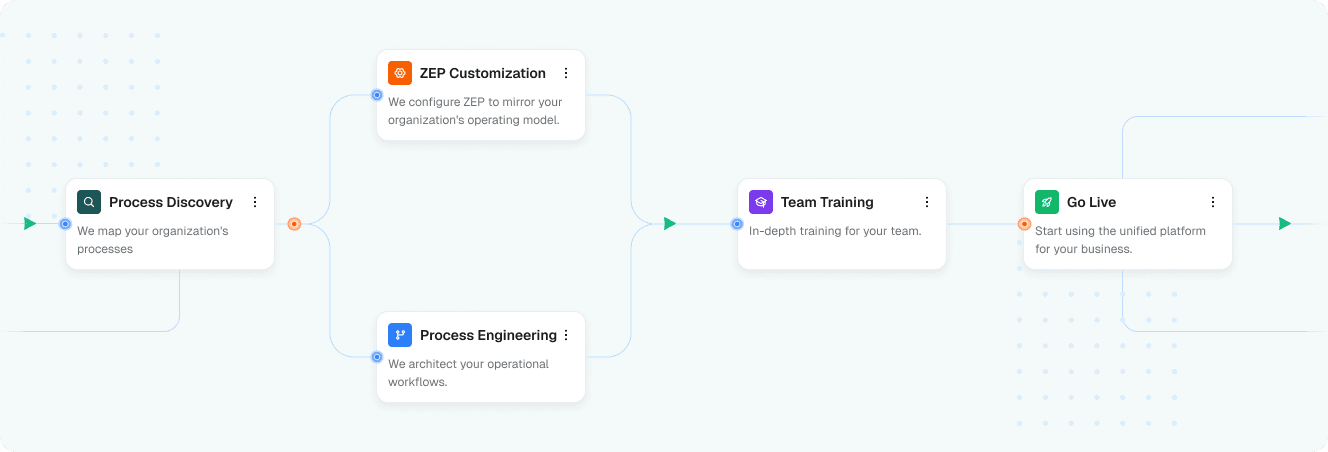
- 1.Piloted ZEP360's site-status module on 8 sites for three weeks before expanding further.
- 2.Trained site supervisors to log daily progress directly in the app instead of a phone call.
- 3.Gave project managers a single dashboard covering all active sites instead of 50 separate phone threads.
- 4.Rolled out to the remaining 42 sites over three weeks, in batches of roughly 14.
What Almost Went Wrong
The first pilot batch skipped photo evidence on status updates, which meant project managers still had to call to confirm progress. Adding a required photo field to the daily log fixed this before the wider rollout.
The Results
- •Scaled from 18 to 50 active sites without adding a single project coordinator.
- •Daily status calls dropped from an average of 45 minutes per project manager to under 10.
- •Site-status disputes between supervisors and the office dropped to near zero once photo logs became standard.
How ZEP360 Handles Field Visibility
ZEP360's site-status module gives every project manager one live dashboard across all active sites, with photo-backed daily logs replacing status calls entirely — the same pattern this contractor used to scale without adding coordinators.
Frequently Asked Questions
How long did the full rollout take?
Six weeks total — a three-week pilot on 8 sites, followed by a three-week phased rollout across the remaining 42.
Did site supervisors resist the change?
Some initially did, since logging progress in an app felt like extra work compared to a phone call. That resistance dropped once supervisors saw it meant far fewer follow-up calls asking for the same information twice.