


Sunview Solar installs residential and small-commercial rooftop systems across three states. By early 2025, the team was closing more deals than ever — and losing weeks on every single one to handoffs between sales, site survey, procurement, and billing that lived in four different tools.
This case study covers what was actually breaking, what Sunview changed first, and the numbers six months after rollout.
About Sunview Solar
Sunview Solar is a 40-person EPC contractor installing rooftop solar for homes and small businesses. Before ZEP360, the team ran leads in a CRM, site surveys on paper, procurement over email, and billing in a separate accounting tool — with no single record connecting the four.
The Challenge: Manual Handoffs Were Costing Weeks
A deal closing in the CRM didn't automatically become a site visit. A completed site survey didn't automatically trigger a procurement order. Every handoff needed someone to notice, re-enter data, and follow up — and every re-entry was a chance for a mismatch.
Where the Delays Actually Came From
- •Site survey data sat in a paper form for 2–4 days before anyone typed it into the system.
- •Procurement orders were manually copied from the survey, occasionally missing a line item.
- •Billing didn't know a project was complete until someone remembered to tell them — often a week late.
Why Sunview Solar Chose ZEP360
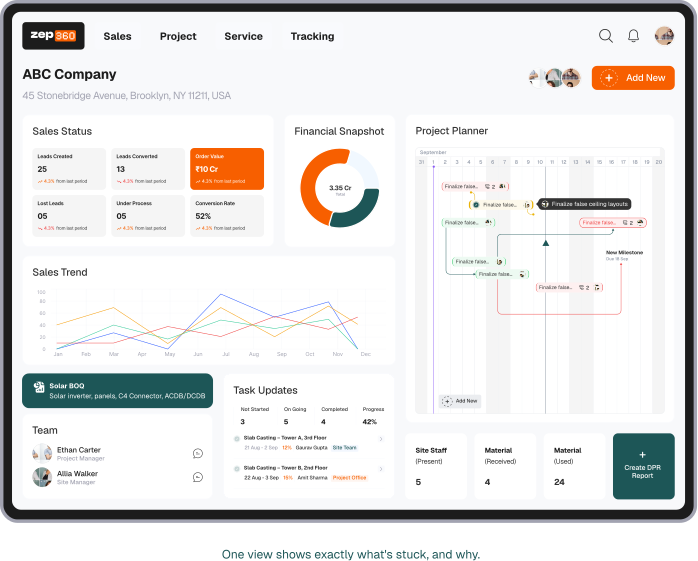
Sunview evaluated two point solutions — a dedicated field-survey app and a separate procurement tool — before deciding neither would fix the actual problem: the handoffs between systems, not any single system itself. They needed one platform where a lead, a site survey, a procurement order, and an invoice were all the same underlying record.
The Rollout: What Changed First
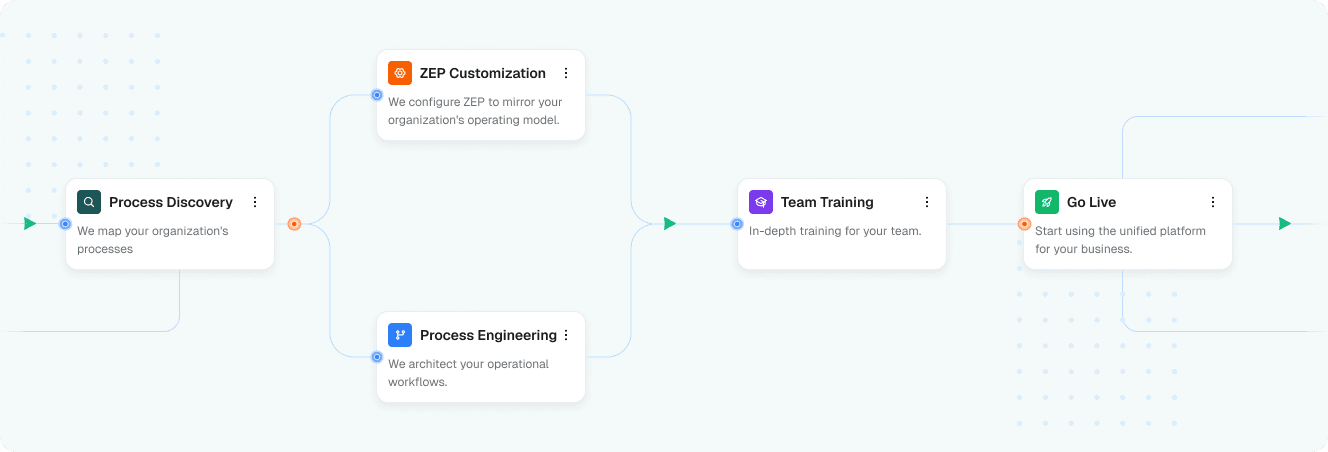
- 1.Migrated active deals and customer records into ZEP360 over one weekend.
- 2.Moved site surveys onto the ZEP360 mobile app, with photos and measurements attached directly to the project record.
- 3.Turned on automatic procurement drafts triggered the moment a site survey is marked complete.
- 4.Connected project completion status directly to the billing module, so invoices go out the same day a site is signed off.
The Results
- •Average project turnaround time dropped from 52 days to 31 days — a 40% reduction.
- •Procurement order errors (wrong or missing line items) fell by roughly 70%.
- •Time from project completion to invoice sent dropped from an average of 9 days to same-day.
What the Team Says
"We didn't realize how much time we were losing to re-typing the same information three times until we stopped doing it. The site survey team doesn't think about procurement at all anymore — it just happens." — Operations Lead, Sunview Solar
The Bottom Line
Sunview Solar's problem was never a missing tool — it was the gap between the tools they already had. Closing that gap, rather than adding another point solution, is what actually moved the turnaround-time number.
Frequently Asked Questions
How long did the data migration take?
Sunview's active deals and customer records were migrated over a single weekend, with the team back to normal operations by Monday morning.
Does this only work for larger teams?
No — Sunview Solar's team is 40 people. The handoff problem this case study describes shows up at almost any team size once sales, site, and billing stop being the same one or two people.
Did the field team stop using paper entirely?
Yes for site surveys — those moved fully onto the mobile app. Some customer-facing paperwork (like signed agreements) still exists in physical form, scanned and attached to the project record afterward.